The Stories of Our Lives: Lincoln, Iowa
- A photograph from 1934 depicting Lincoln’s town kittenball team, the Wentzein Hardware Kittenball Team which was sponsored by the local hardware store. The team won the Corn Belt League’s county tournament that summer. PHOTO COURTESY DEAN HOPPE
- Lincoln’s historic Log Church or Community House, date unknown. Through the years the structure served as a church, scene of potluck suppers, Vacation Bible School, community plays and even basketball. PHOTO COURTESY DEAN HOPPE
- Lincoln’s Salem Church. Through the years, the church has served as a vital gathering spot for Lincoln and surrounding area residents. PHOTO COURTESY DEAN HOPPE
- Salem Church, Lincoln. Date unknown. PHOTO COURTESY DEAN HOPPE
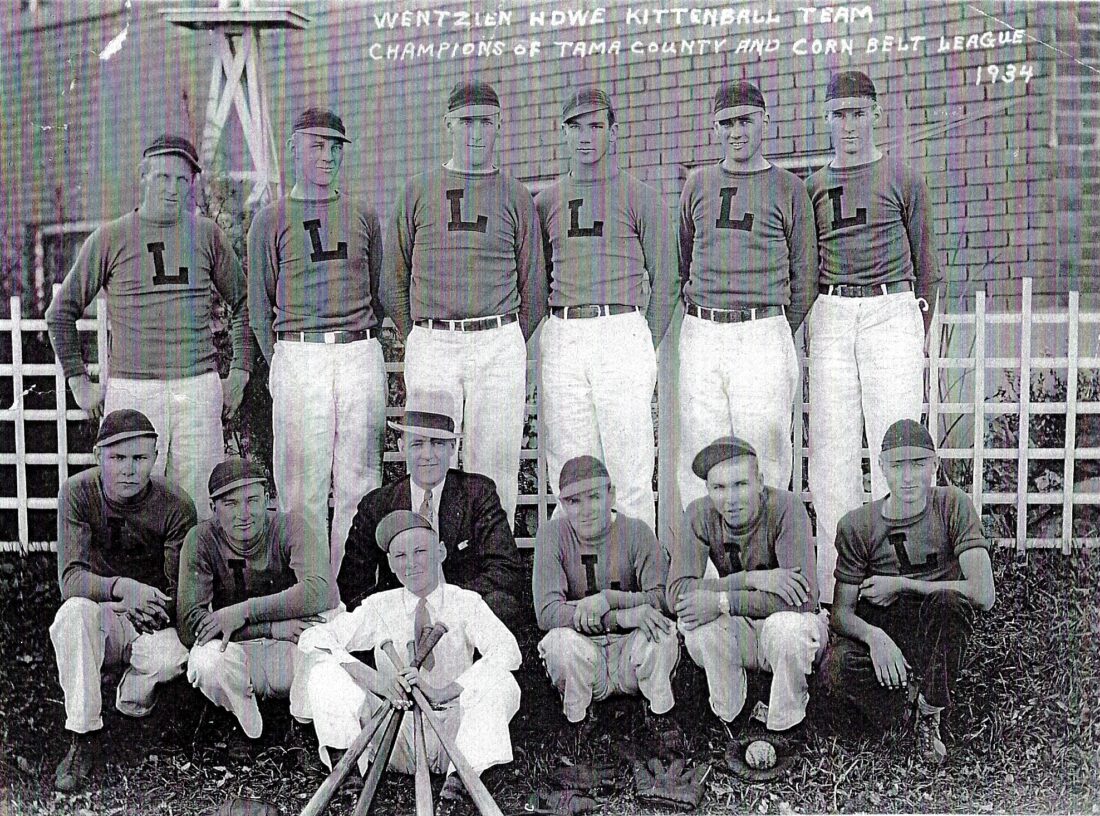
A photograph from 1934 depicting Lincoln’s town kittenball team, the Wentzein Hardware Kittenball Team which was sponsored by the local hardware store. The team won the Corn Belt League’s county tournament that summer. PHOTO COURTESY DEAN HOPPE
This article is dedicated to the citizens of Lincoln, past and present. It describes what it was like to live in that community during the author’s formative years (the 1950s). If the stories of our past are not shared, they will vanish with the storyteller and be forgotten.
LINCOLN – The Tama County town of Lincoln may be a small dot on the map of the state of Iowa, but it projected a large, memorable influence on those of us who lived in or near the town in the 1950s. Lincoln taught us the importance of a strong work ethic, frugality and the virtue of caring for your neighbor. Like the rich, black soil in the fields of the area, Lincoln provided the fertile ground that enabled those values to take root and grow. Lincoln was the scene of life experiences that laid the foundation upon which we build our lives.
The town of Lincoln was settled by German immigrants in the mid-19th century. Many residents spoke German and observed German traditions such as Kinderfest, a celebration for children. In 1883, the town was named Berlin as an acknowledgment of its ties to Deutschland. The arrival of World War I was a disruptive force in the community as many citizens felt compelled to demonstrate their patriotism while questioning that of others. Hence, the name of the town was changed to Lincoln in June 1918.
You may ask, “Why write an article about a small town like Lincoln?” Lincoln was typical of many small towns that were scattered throughout the rural Iowa landscape in the 1950s. Small towns were the place people gathered for shopping, socializing, church and entertainment. It was a safe place to grow up because the citizens looked out for and trusted one another. House doors were usually not locked and keys were left in parked car ignitions.
A vital gathering spot for Lincoln and the surrounding area residents was Salem Church. Not only did the church serve as a place to express one’s faith, it provided a connection and singular purpose through women’s auxiliaries such as the Living Branches and the Helping Hands Society. Church choirs for adults, young boys and young women (the Salem Songbirds) filled the sanctuary with music on Sunday mornings. The church was the setting for weddings, baptisms, social groups, religious education and funeral services for deceased friends and neighbors. It was the epicenter of Lincoln.
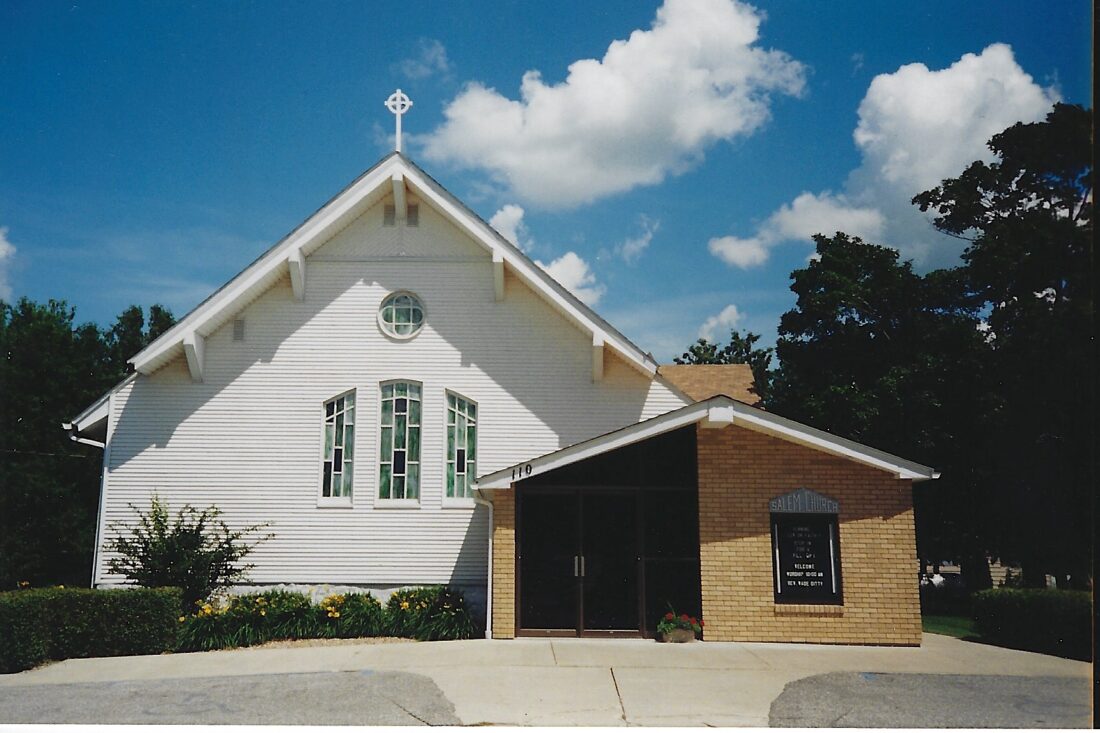
Lincoln’s Salem Church. Through the years, the church has served as a vital gathering spot for Lincoln and surrounding area residents. PHOTO COURTESY DEAN HOPPE
Located near Salem Church was a building known as the Log Church or Community House. In its early years, it served as a church, scene of potluck suppers, Vacation Bible School, community plays and even basketball. On a small basketball court, young athletes could hone their shooting skills. Gloves might be required as the building was not always heated.
It was a short walk from Salem Church to downtown Lincoln. Businesses included Skare’s grocery and Wentzein’s hardware store, a dentist, Wolleson and Jipp general store, a grain elevator, beauty shop, radio and TV repair shop, Sienknecht Trucking, the Lincoln Savings Bank and Lefty and Pauline’s tavern and restaurant. Residents supported their local businesses as most things you needed could be bought in Lincoln.
Young residents of Lincoln found ways to entertain themselves. Your bicycle was all you needed to get across town in five minutes or less. An area on the railroad tracks called “bum’s trail” was a favorite place to stir your imagination and pursue adventures with your friends. The community sponsored tractor-pull competitions, Watermelon Days and dances at the Amvet Hall. During summer nights, outdoor movies would occasionally be shown in an open lot. A white sheet served as a screen and moviegoers could sit on planks laid on concrete blocks. The hardware store sponsored a town kittenball (similar to softball) team that won the county tournament. To escape the boredom and isolation of frigid winter days, area farmers might be found in the tavern enjoying a game of cards.
Lincoln youth were educated in a two-story schoolhouse as classes were conducted by two teachers. Kindergarten and first- and second-grade students were on the first floor, while third- through fifth-grade students were on the second floor. The school closed in 1957 and students attended classes in Gladbrook.
Small rural communities were an important part of the narrative of the American story. In the 1950s, life posed fewer distractions and the focus was on the community in which one lived. The Lincolns of the 1950s represent an era that will not be repeated, but the fond memories stay with us.
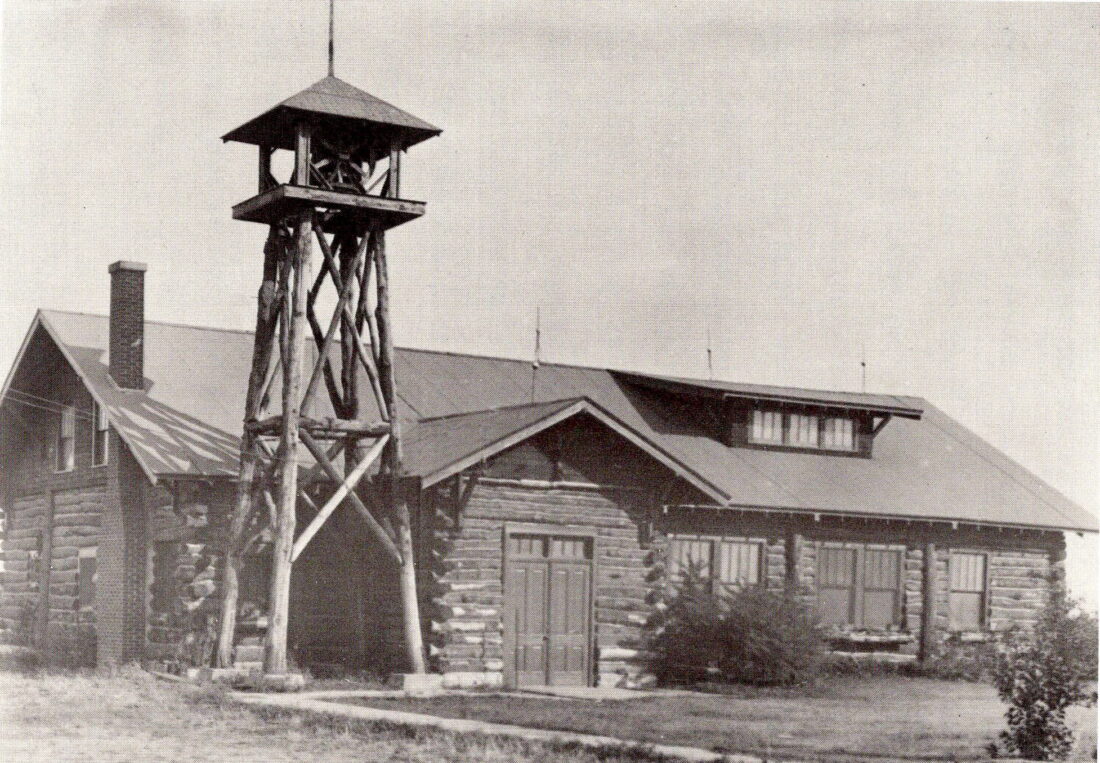
Lincoln’s historic Log Church or Community House, date unknown. Through the years the structure served as a church, scene of potluck suppers, Vacation Bible School, community plays and even basketball. PHOTO COURTESY DEAN HOPPE
When the author is asked where he lives, he responds that his address is in Minnesota but his heart and soul still reside in that community in the northwest corner of Tama County, Iowa. Like others who grew up in small towns, our experience left an indelible mark on who we are. Most of us are grateful for it.
This article was written by Dean Hoppe, a proud 1963 graduate of Gladbrook High School. The author thanks those who contributed to the content of this article by sharing their recollections of life in Lincoln.
Local News

GMG Elementary Flag Raising
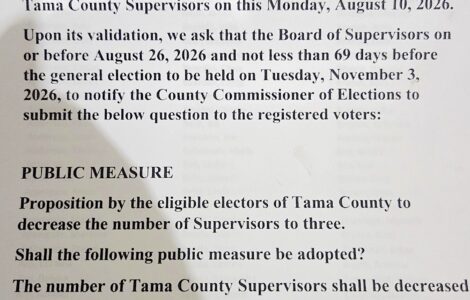
Tama County Board of Supervisors receives petition to drop back to three members
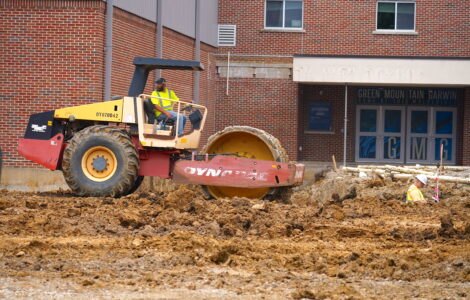
Community invited to GMG Secondary School groundbreaking set for Monday, Aug. 24
Gladbrook Senior Dinner set for Sept. 11 at Chapel Church
GLADBROOK – The Gladbrook Area Senior Citizens' Meal is set for Friday, Sept. 11, beginning at 11:30 a.m. at ...

Murty sisters earn multiple awards at 2026 Iowa State Fair FFA shows