Meggers’ Memo: Week 5
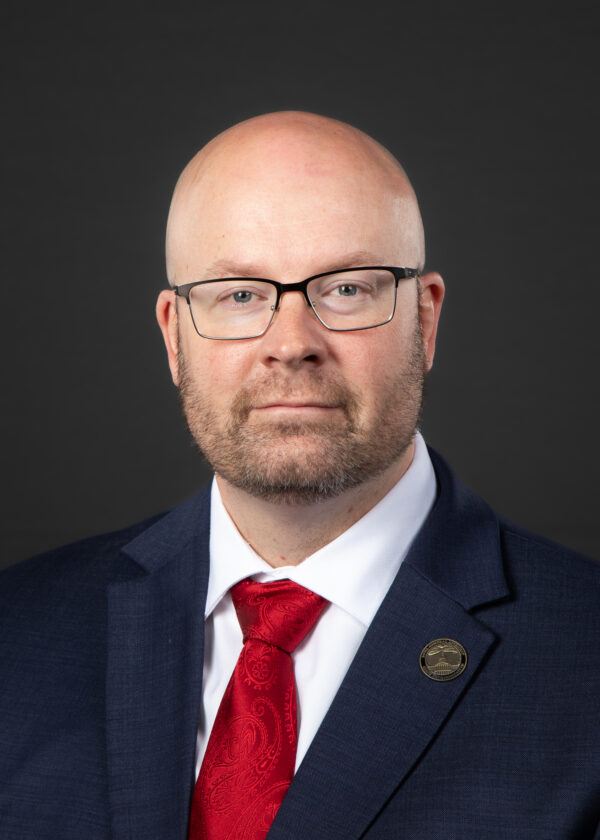
State Rep. Joshua Meggers (R-Grundy Center).
As we wrap up Week 5 of Session, let me share what has been happening this week.
Agriculture Committee Pushes Important Bills Ahead of Funnel
The House Agriculture Committee was active this week, advancing legislation on a range of issues including thoroughbred and quarter horse racing, farm-raised shellfish, diesel exhaust fluid (DEF), a grain indemnity audit fix, liability protections related to greenhouse gas emissions (often referred to as the “cow-gas” bill), and water quality standards requiring DNA testing of fecal bacteria to identify its source.
House Study Bill 684 – Diesel Exhaust Fluid (DEF)
House Study Bill 684 requires original farm equipment manufacturers to provide owners, lessees, and licensees with the same diagnostic and repair information, technical updates, embedded software, replacement parts, and tools for DEF systems that are available to authorized repair providers.
The bill prohibits manufacturers from imposing unfair restrictions or additional burdens on access to these materials and voids any contractual waiver of these rights. The Attorney General is granted rulemaking and enforcement authority, and violations are classified as unfair or deceptive trade practices subject to civil penalties.
House Study Bill 693 – Greenhouse Gas Liability (“Cow-Gas” Bill)
House Study Bill 693 establishes liability protections in Iowa for defendants facing civil or criminal claims related to alleged actual or potential climate effects from greenhouse gas emissions.
The immunity applies to emissions from agricultural and renewable fuel sources, as well as specific gases listed in the bill. Liability would only be permitted if it is clearly proven that a defendant violated an enforceable statutory limitation or a valid, enforceable permit related to greenhouse gas emissions.
The bill does not create a new right to sue and applies regardless of the type of relief sought. Plaintiffs must meet strict evidentiary standards when alleging damages or injury related to greenhouse gas emissions.
Cyber and AI Legislation Clears House Economic Growth Committee
House Study Bill 609 passed the House Economic Growth Committee this week on a party-line vote and now moves to the full House for consideration. The bill focuses on preparing Iowa for workforce demands in cybersecurity and artificial intelligence.
The legislation requires the Workforce Development Board to establish a comprehensive initiative addressing Iowa’s cyber and AI workforce needs, including:
-Supporting the development and implementation of K-12 literacy standards for cybersecurity and artificial intelligence
-Facilitating partnerships between regent universities and private industry to create internships, research opportunities, and specialized degree programs
-Subject to appropriation, establishing and operating a grant program for educational institutions and private-sector entities to support training and career transitions into cyber and AI fields
The bill also directs the State Board of Education, in collaboration with regent universities and community colleges, to oversee implementation of curriculum from kindergarten through higher education that includes:
-Prioritizing federal funding opportunities to help bridge gaps between K-12 and higher education
-Establishing statewide standards and mandated outcomes for cyber and AI literacy
-Developing consistent statewide standards for cyber and AI education
-Creating a voluntary certification program for schools that meet established cyber and AI standards and best practices
Additionally, the Department of Education, in collaboration with the Department of Public Safety, would develop and implement a statewide community education initiative focused on cyber and AI awareness.
Per Pupil Funding Increases, School Staffing Increases, but Enrollment Declines
Legislative discussions about education funding often assume that more funding directly translates into more resources for students. However, recent trends show a more complex picture. As per-pupil funding has increased, overall student enrollment has declined — while the number of school employees has risen significantly. A graph from Edunomics Lab highlights a sharp increase in staffing compared to enrollment trends. (To view additional state or national data, visit: https://edunomicslab.org/staffing-v-enrollment-trends/)
This raises an important question: Does Iowa face a funding issue — or an enrollment issue?
Iowa needs more babies, more children, and more students in our schools.
House Judiciary Committee Advances Key Bills Before Funnel Deadline
HSB 564 – Safety of Those Involved with the Courts
This Attorney General-sponsored bill strengthens protections for members of the judiciary and Attorney General’s Office. It includes three main provisions:
1. Professional Permits to Carry Weapons
Allows judges, the Attorney General, deputy AGs, and assistant AGs to apply for professional permits to carry weapons. The Judicial Branch may establish additional standards for judges.
2. Criminal Penalty for Threatening Judicial Officers or Their Families
Creates a Class “C” felony for threatening a judge or immediate family member with the intent to intimidate, interfere with official duties, or retaliate.
3. Criminalizing Malicious Sharing of Personal Information
Makes it a misdemeanor to maliciously share a judge’s or their family’s personal information (such as a home address) with intent to cause harm or interfere with their duties.
The bill was amended in committee to clarify that first-degree harassment can occur online or through other forms of communication.
HSB 617 – Sexual Exploitation Sentencing
This bill prohibits courts from granting deferred or suspended sentences for individuals convicted of sexual exploitation of a minor (Section 728.12) when the victim was under 12 years old or prepubescent at the time of the offense.
HF 922 – Financial Discrimination
House File 922 makes it unlawful for financial institutions to discriminate against individuals based on social credit scores when providing financial services.
Discrimination includes denying or limiting services due to protected speech or certain lawful business activities. If services are denied, individuals may request a written explanation, and the institution must respond within 14 days.
The Attorney General is authorized to enforce the law, and individuals harmed by violations may seek damages, with increased penalties for willful violations.
House Republicans Advance Bill to Strengthen Iowa’s Bail System
Republicans on the Public Safety Committee advanced House Study Bill 641 this week to promote consistency, transparency, and accountability in Iowa’s bail system.
Bail should be consistent statewide, reflect the seriousness of the offense, and prioritize public safety.
HSB 641 establishes clear standards for bail determinations. Judges must follow the bond amount listed on the warrant unless there is a compelling reason to modify it. Any changes must be explained in writing, increasing transparency and reducing inconsistencies across counties.
The bill also limits eligibility for release without posting bail. Only individuals charged with nonviolent, non-drug misdemeanors would qualify. Those accused of violent crimes, weapons offenses, or drug-related crimes would be required to post bail prior to release.
For the most serious offenses, the standard bond schedule would no longer automatically apply. Judges would be required to evaluate the case and assess public safety risks before release.
Republicans supported advancing the bill, stating that public safety must come first. Democrats voted against the bill in committee and offered an amendment that would have removed most provisions, leaving only an updated bond schedule.
Supporters argue that Iowa families deserve a bail system that is consistent, transparent, and focused on safety — and that HSB 641 moves the state in that direction.
If you ever have any questions, feel free to email me at joshua.meggers@legis.iowa.gov or visit my Facebook page at Joshua Meggers for Iowa House. Feel free to come visit me within the Capitol at any time!
Joshua Meggers (R-Grundy Center) represents Iowa House District 54 which includes all of Grundy and Hardin counties and several rural townships on the far western edge of Black Hawk County.
Editorials
A Lifeline for Main Street: How New Federal Guarantees Can Save American Manufacturing Jobs

Q&A: Government Shutdowns Fail the American People

When should farmers retire?

How AEA career supports connect students to life

Private Schools Should be Held to Same Accountability Standards as Public Schools