Eagle-eyed Tama County residents get quite a show
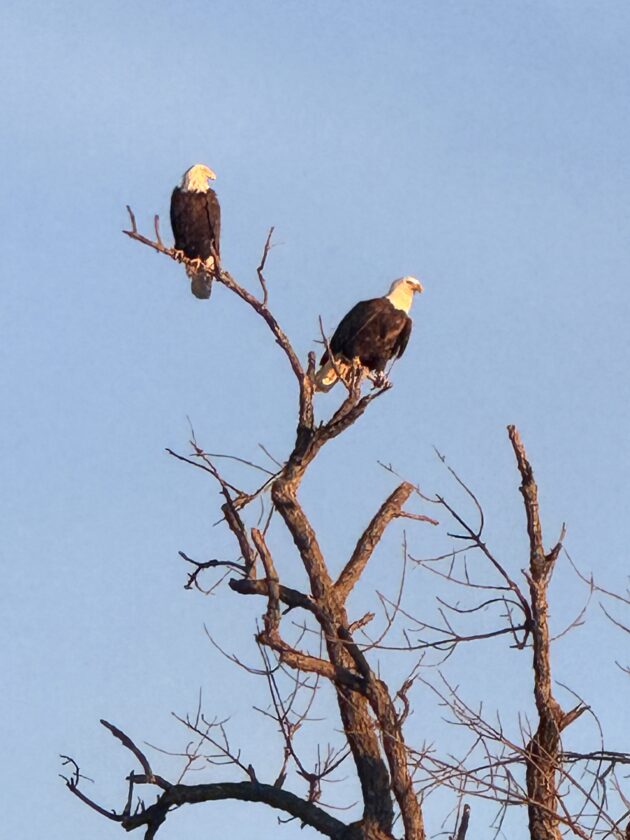
A pair of bald eagles photographed west of Traer back on Feb. 16, 2026. PHOTO BY MINDY FINZEN/RUGGED EDGE CUTS
TRAER – Last month, rural Tama County resident and photographer Mindy Finzen and her family were witness to quite a show at their acreage west of Traer as half a dozen bald eagles perched in leafless trees near their home beneath a perfect azure sky.
“There were just lots of eagles flying around that day, it was so cool to see,” Finzen said of the eagles she photographed from her vehicle. “They liked the nice weather! They are so big and so beautiful – it was cool to see them up close!”
According to Iowa State University wildlife ecology research assistant Coralee Bodeker, most adult bald eagles are paired up by February and are busy incubating their eggs currently. Any large flocks people may observe congregated near reservoirs at this point are more than likely non-breeding residents or migratory birds on a pit stop, she added.
As majestic and inspiring as bald eagles are, when viewing and/or photographing them – or any raptor – it is best to do so from a window inside your house or vehicle, or from a bird blind,
“Try to stay at least 400 yards away from a perched eagle, especially a nest to avoid disturbing them,” Bodeker advised. “Also, if people spot eagle nests on their property they should report them to the Iowa DNR which maintains a database of nests.”
Much to the delight of many an Iowan, including Finzen, the bald eagle population here is doing quite well currently when compared to historical trends.
“We’ve seen a drastic increase in the number of overwintering and nesting eagles here,” Bodeker explained. “The species’ recovery since the ’60s and [the subsequent ban in the U.S. of most DDT uses] has been a huge success and Iowa has been a big part of it with our river resources. The Iowa DNR has observed increasing nest-success rates in the last several years.”
While bald eagles appear to be thriving in Iowa, Bodeker added that both lead poisoning and vehicle collisions remain threats, especially since eagles frequently feed on roadkill.
“If it’s safe to do so, people should always slow down when passing an eagle on the side of the road. Hunters and fishers can switch to lead-free ammunition and tackle to reduce the amount of lead eagles and other wildlife are exposed to in our environment. Something like 50% of eagles rehabilitated in Iowa are brought in with lead in their blood.”
As encouraging as it is to have so many eagles on the landscape in Iowa in 2026, it’s still important to be considerate — particularly in the months ahead as the next generation of our nation’s symbol takes flight.
Telegraph Note: The Iowa DNR maintains a database of bald eagle nests and is interested in keeping it as up to date as possible, including exact location of the nest; whether the nest is being used by eagles; and if young are present, how many and the date of the observation. To report a nest, visit the following website: https://www.iowadnr.gov/programs-services/volunteer-opportunities/wildlife-monitoring#report-a-bald-eagle-nest.
Local News

Grundy County candidates file for June 2 primary election
Eagle-eyed Tama County residents get quite a show
Gladbrook Community Foundation accepting grant applications
GLADBROOK – The Gladbrook Community Foundation board members are pleased to announce they are now accepting grant ...

Chapter 1: In the Books

Republican Rocky Damiano officially files for Iowa SD27