Chronic Wasting Disease in Iowa Part IV

IOWA – The Iowa DNR is releasing a series on chronic wasting disease, to provide the latest information and online tools to one of our most important partners- Iowa’s deer hunters.
This series will be released in four parts; topics include:
–Sampling and Testing Iowa Deer
–New Chronic Wasting Disease Response Plan
-Importance of Deer Hunting
Part IV: Importance of Deer Hunting
Iowa’s deer resource is estimated to generate nearly $200 million in annual economic activity, much of which is spent on gas, hotels, meals, gear, supplies and more in rural communities.
Deer hunting is one of the events throughout the year that can bring together friends and family from across the state and around the country. For many, it is a tradition where experiences are shared and skills are passed on from one generation to the next.
“The true value of Iowa’s deer is likely so much greater, especially if we could account for intangible benefits, like enjoying seeing deer on the landscape, and the positive impacts our deer population has on recreational property value,” said Jace Elliott, state deer biologist with the Iowa Department of Natural Resources (DNR).
Other hard-to-quantify values include connecting with nature and the mental and physical benefits that come with time spent outdoors, as well as reducing screen time. Additionally, venison is a high quality, lean, locally sourced, delicious protein.
Improving the quality of timber and prairie when managing deer habitat provides benefits to other wildlife species, like turkeys, squirrels, grassland birds, woodland birds, butterflies, and more, as well as increases property values.
Iowa is renowned for quality deer hunting experiences, largely due to a comprehensive regulatory strategy that prioritizes residents and encourages a strong population of large-antlered, mature bucks on the landscape. Given Iowa’s fragmented landscape, the Iowa DNR recognizes the importance of safeguarding the world-class quality achieved through common-sense regulations and hunter engagement.
“We have a great relationship with our hunters, who prioritize their free time and vacation days to pursue deer,” Elliott said. “They are our most important partner because, at the end of the day, we can’t manage a balanced, quality deer herd without them.”
Iowa has more than 160,000 deer hunters who harvest over 100,000 deer each year. For more information about deer and deer health in Iowa, visit https://www.iowadnr.gov/deer.
Local News
Werner shares her story during ‘Extension and 4-H Voices Day at the Capitol’

Pre-registration now open for Gladbrook-Reinbeck 2026-27 Kindergarten/TK
Tama SWCD promotes Stewardship Week 2026
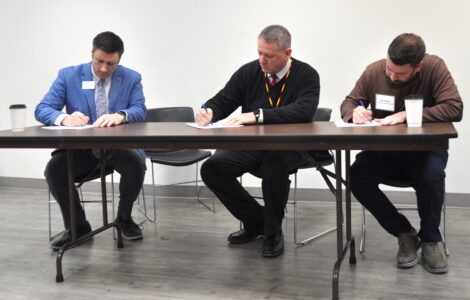
Tama County Supervisors, Marshalltown Area Chamber of Commerce formalize contract at signing event

Public Health budget takes center stage at supervisors meeting